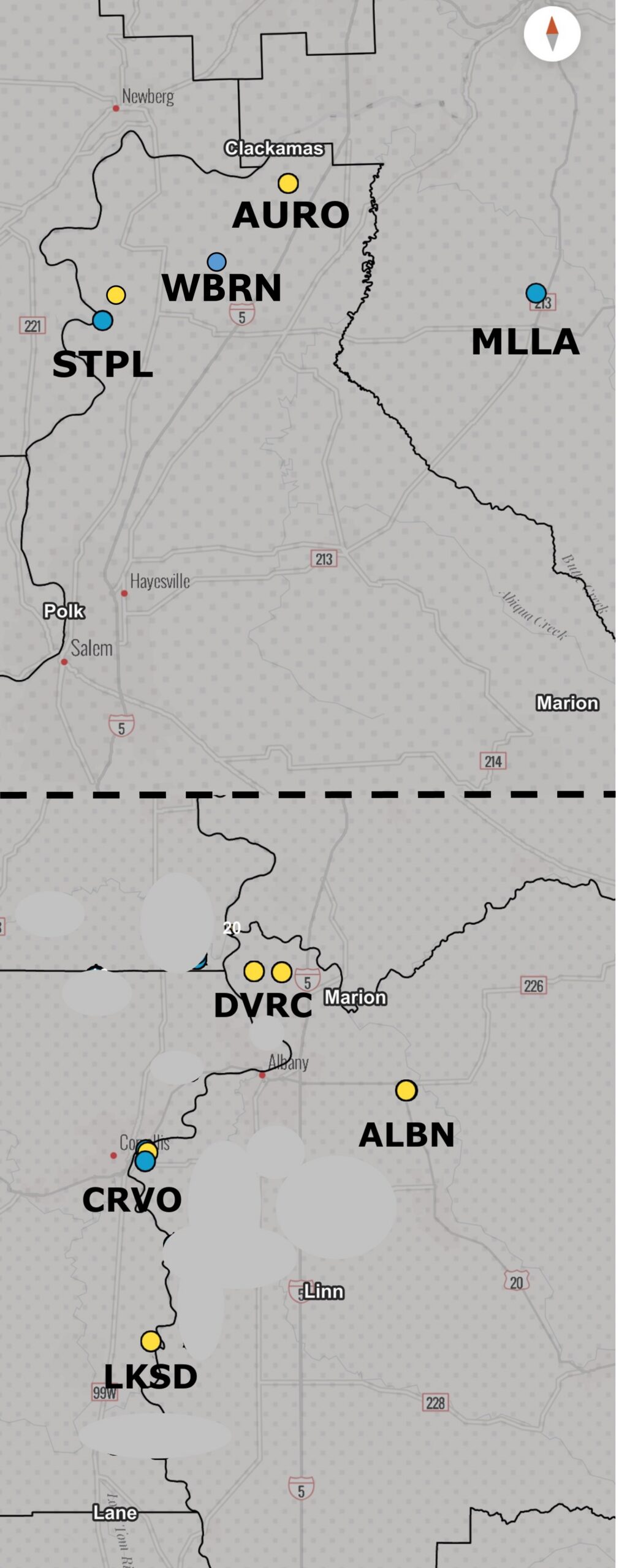
- The table below shows trap counts from vegetable fields and a research farm within the Willamette Valley, OR. through June 11th, 2026.
- ** Black cutworm and corn earworm counts are both above normal – view full report (.pdf below) for details.
- Additional monitoring sites are being added – please contact me if you have brassica fields.
Category Archives: black cutworm
Pest Report – Week of Aug 7th
WEEK 18 – Diamondback moths are exploding, and I try my hand at interactive maps!
Read the full report here: http://bit.ly/VNweek18 and subscribe on our homepage to receive weekly newsletters during field season. Thanks!
We monitor for cabbage loopers because they are pests of brassica crops. Feeding can occur on a wide variety of vegetable hosts including: beet, celery, cucumber, lettuce, pea, pepper, snap bean, spinach. Not all hosts are suitable for complete development of the insect, but feeding is feeding, from a grower or gardener’s perspective.
Pest Report – Week of July 17th
WEEK 15 full report available here:
- Black cutworms will be large now, and can cause major root damage in corn. Consult the PNW insect management handbook for possible rescue treatments.
- Diamondback pressure is still very high at remaining production fields.
- Corn earworm – If chemical controls are needed, they must be applied before larvae move into developing ears.
Pest Report and Press Release
WEEK 13: Early earworms; diamondback overlap – FULL REPORT HERE
- Diamondback Moths are one of the smallest crop pest moths one is likely to encounter, but damage can be extensive. Part of the problem is their capacity to reproduce quickly, which leads to population buildup in a very short time. This is temperature-dependent and if not monitored, can catch growers off guard.
- Corn Earworm is normally considered a late-season pest, but trends so far this year suggest a pattern similar to 2014, which resulted in a boom of moths in August, just as corn is silking. Larvae feed on corn silks and burrow into the ears. The resulting damage and frass (insect poop!) can cause delays in processing, or reduction of fresh-market value. This page shows how to identify corn earworm adult moths.
- VegNet was featured in the July-Aug issue of OSU Linn & Benton Cty Extension’s Newsletter! Click photo to read the article.
Thanks for reading! Be sure to subscribe to receive alerts and updates.